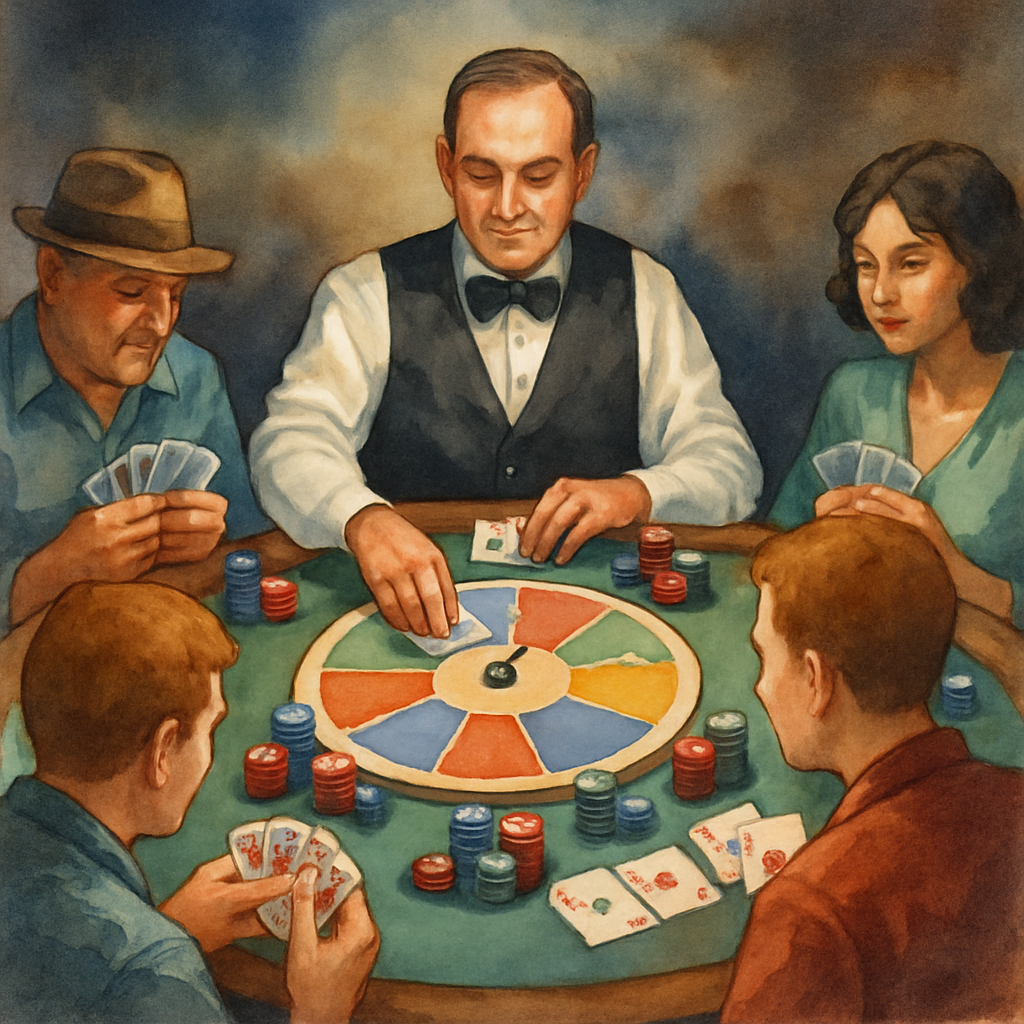
Best Dealer’s Choice Game Combinations to Try

When Robert Mizrachi captured his second WSOP Dealer’s Choice bracelet in 2024 for $333,045, he demonstrated what separates casual mixed game players from true specialists: the ability to strategically select games that maximize edges while exploiting opponents’ weaknesses. Today’s dealer’s choice format has evolved from informal home games into a sophisticated test of complete poker mastery, featured in $10,000 WSOP Championships and weekly high-stakes streams at premier venues worldwide.
Understanding the Dealer’s Choice Format
Dealer’s choice poker transforms traditional single-game sessions into dynamic experiences where the player in the dealer position selects which variant to play from a predetermined list. Unlike standard poker nights focused on No-Limit Hold’em, dealer’s choice creates constantly evolving strategic landscapes requiring versatility across multiple disciplines.
The World Series of Poker standardizes a 20-game list for championship events, encompassing Hold’em variants, Omaha games including Big O, stud variants from Seven Card Stud to Razz, draw games like 2-7 Triple Draw and Badugi, plus split-pot combinations including Badeucy and Badacey.
Popular Rotation Formats
- Orbit-based: Each game plays for one complete rotation around the table
- Per-hand: Dealer selects a new game every hand (chaotic, not recommended)
- Orbit plus one: Dealer plays selected game for full orbit then deals it once more
- Time-based: Games rotate every 30-45 minutes in cash games
Strategic Game Selection and Skill Development
Success in dealer’s choice requires sophisticated game selection strategy beyond personal preferences. Professional players assess opponents’ weaknesses across variants, selecting games where they hold the largest skill edge while avoiding opponents’ strongest disciplines.
Stack size considerations significantly influence optimal game selection. Deep stacks favor pot-limit and no-limit variants for maximum leverage, medium stacks benefit from limit games with multiple betting rounds, while short stacks require games with fewer decision points or push-fold dynamics.
The Three-Level Progression Path
Beginner Level (3-5 games): Focus on fixed-limit structures to minimize variance. Start with familiar games like Limit Hold’em and Seven Card Stud before introducing split-pot concepts through Omaha Hi-Lo. This foundation teaches hand reading, position awareness, and pot odds calculations without overwhelming bankroll requirements.
Intermediate Level (6-8 games): Expand to the classic HORSE format, adding pot-limit structures and basic lowball concepts through games like 2-7 Single Draw and Badugi. This level develops crucial skills in rapid mental framework switching between game types and understanding how betting structures affect strategic decisions.
Advanced Level (20+ games): Master the full arsenal including complex variants like Double Board Omaha and 6-Card Omaha. Professional-level play requires expertise in game selection psychology, exploiting specific opponent weaknesses in lesser-known games, and developing tournament-specific short-stack strategies across all variants.
Best Game Combinations by Skill Level
Beginner-Friendly 5-Game Mix
| Game | Betting Structure | Key Skills Developed |
|---|---|---|
| Limit Hold’em | Fixed Limit | Hand selection, position play |
| Pot-Limit Omaha | Pot Limit | Drawing odds, multi-way dynamics |
| Seven Card Stud | Fixed Limit | Memory, exposed card reading |
| Razz | Fixed Limit | Lowball concepts, board reading |
| Omaha Hi-Lo | Fixed Limit | Split-pot strategy, quartering |
Intermediate 8-Game Mix (Standard WSOP Format)
The 8-Game mix adds complexity with 2-7 Triple Draw, No-Limit Hold’em, and Pot-Limit Omaha to the HORSE foundation. This combination tests players across all major poker categories while introducing multiple betting structures.
Advanced Professional Rotation
The 10-Game mix incorporates No-Limit 2-7 Single Draw and Badugi, while elite players add variants like Dramaha, Courchevel, and Archie for maximum variety.
Professional Tournament Structures and High-Stakes Implementation
The World Series of Poker dealer’s choice events represent the pinnacle of mixed game competition. The 2024 events drew 530 entries ($1,500 buy-in) and 124 entries ($10,000 buy-in), with champions like John Hennigan ($138,296) and Robert Mizrachi ($333,045) demonstrating substantial prize pools.
High-stakes cash game implementations have emerged as significant revenue drivers. The Lodge Card Club in Texas runs weekly $20/$40 dealer’s choice games every Wednesday, attracting professional players and content creators. Major Las Vegas venues including Aria and Bellagio feature dealer’s choice in their high-stakes mixed game offerings.
PokerGO Tour Mixed Games Series 2024
The PGT launched a dedicated Mixed Games Series featuring:
- 10 tournaments with buy-ins from $5,300 to $26,000
- Live streaming coverage on PokerGO platform
- $26,000 10-Game Championship as premier event
- Professional commentary and hole card coverage
Hosting Your Own Dealer’s Choice Game
Successful dealer’s choice hosting requires careful attention to player count optimization, equipment preparation, and rule establishment. The ideal player count ranges from 5-7 players, with six providing optimal game variety and pace.
Essential Equipment and Setup
- Two decks with different colored backs for continuous shuffling
- Minimum chip buy-ins of 50 times the minimum bet
- Pre-written rule sheets for approved games
- Designated game list of 8-15 variants established before play
- Timer for time-based rotations (optional)
Common Hosting Mistakes to Avoid
Changing games too frequently creates chaos – stick to orbit-based rotations. Allowing unlimited game selection without approved lists leads to disputes and confusion. Mixing incompatible betting structures disrupts game flow, while failing to provide adequate rule explanations frustrates newer players.
For mixed skill groups, experienced players should openly explain strategies while using micro-stakes to reduce intimidation. Consider implementing a 25% familiar games, 50% intermediate games, 25% exotic games distribution to balance comfort with challenge.
Bankroll Management and Variance Considerations
Dealer’s choice requires substantially larger bankrolls than single-game formats due to increased variance across multiple disciplines. Conservative players should maintain 400-500 big bets for full mixed game play in fixed-limit formats.
Bankroll Requirements by Format
- Fixed-limit heavy rotation: 300 big bets minimum
- Mixed limit/pot-limit: 40-50 buy-ins
- Including no-limit variants: 100+ buy-ins
- Tournament play: 150-200 buy-ins for regular play
Game-specific variance differs significantly. Draw games create the highest variance due to drawing uncertainty, while split-pot games increase variance through quartered pots. Pot-Limit Omaha variants generate substantial drawing variance in multi-way pots.
Building Comprehensive Dealer’s Choice Rotations
The Community Card Block
Combining Texas Hold’em, Omaha, and Big O works because all use flop/turn/river structures while varying hole card requirements from 2-4-5 cards respectively. This creates natural skill differentiation within familiar frameworks.
The Stud Block
Seven Card Stud, Razz, and Stud Hi-Lo maintain identical dealing structures while testing different hand objectives, allowing observational skills to transfer across variants.
The Draw Game Block
2-7 Triple Draw, Five Card Draw, and Badugi provide variety in drawing strategies and hand rankings while maintaining similar decision points around drawing and betting.
Master Mixed Game Strategy
Ready to elevate your dealer’s choice game? Explore our comprehensive guides:
Recent Innovations and Future Trends
The 2020-2025 period witnessed significant innovation in dealer’s choice formats. The Lodge Card Club’s weekly streams featuring Doug Polk, Brad Owen, and Andrew Neeme attract tens of thousands of viewers, with their YouTube channel surpassing 75,000 subscribers.
Technology integration has created new possibilities through platforms like PokerCows for social gaming and Smart Dealer Poker for digitized home games. The PokerGO streaming platform expanded to over 300 hours of live WSOP coverage including mixed games events.
New variants gaining traction include Big O, Dramaha (Omaha/Five Card Draw split), and short deck variants integrated into mixed rotations. The Texas poker boom has established regional innovation hubs where social club models avoid traditional rake structures while offering premium dealer’s choice experiences.
Frequently Asked Questions
Mastering the Art of Game Selection
Dealer’s choice poker has evolved from informal home entertainment into a sophisticated format demanding complete poker mastery. Success requires systematic skill development across multiple variants, conservative bankroll management during learning phases, and strategic game selection maximizing edges while minimizing unfamiliar variant exposure.
The combination of traditional venue offerings, professional tournament structures, streaming technology integration, and innovative online platforms has created unprecedented accessibility for players seeking mixed game challenges. Whether hosting home games, competing in WSOP events, or streaming content online, dealer’s choice represents poker’s most comprehensive test of versatility, adaptability, and strategic thinking.
As the format continues evolving with new variants like Pineapple Hold’em and Open Face Chinese, dealer’s choice offers intellectually rewarding gameplay that tests complete poker skills while maintaining the social, recreational elements that originally made poker compelling. Master the rotation, understand the variance, and embrace the challenge of poker’s ultimate test.
Key Takeaways: Dealer’s Choice Success
- Start small: Begin with 5-game rotations before expanding to 8-Game and beyond
- Use orbit-based rotation: Each game plays for one full orbit for optimal balance
- Maintain proper bankroll: 400-500 big bets for limit games, 100+ buy-ins with no-limit
- Strategic selection: Choose games that exploit opponents’ weaknesses, not personal favorites
- Professional standard: WSOP uses 20 games; home games work best with 8-12
- Stack size matters: Deep stacks favor pot-limit/no-limit; short stacks need simpler games
About the Author

Mixed Game Masters Editorial
Published: August 5, 2026 | Categories: Strategy, Mixed Games
Mixed Game Masters is the premier resource for non-Hold’em poker strategy, tournament coverage, and mixed game education. Our editorial team consists of experienced players and poker historians dedicated to preserving and sharing the rich history of poker’s most challenging variants.
We provide comprehensive coverage of stud games, lowball variants, and mixed game formats, helping players of all levels improve their skills beyond traditional No-Limit Hold’em.
Leave a Reply