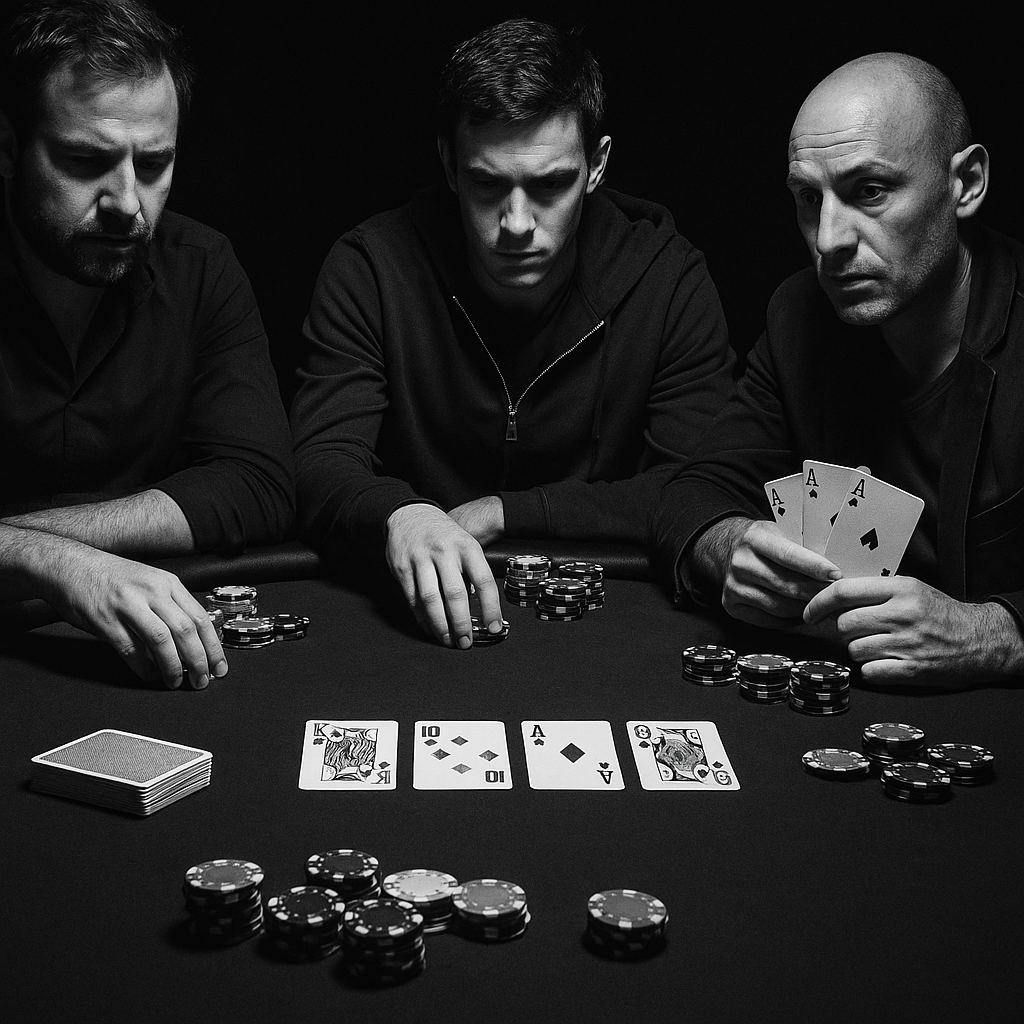
Short Deck Hold’em Hand Analysis: Aggressive Preflop Calls

Short Deck Hold’em’s compressed equity ranges and favorable ante structure create a mathematical foundation where aggressive preflop calling transforms from loose play into optimal strategy. With the ante structure providing 7:1 pot odds requiring only 11% equity to call profitably, combined with dramatic equity compression that reduces AA vs JT from 77-23% to just 63-37%, players must abandon traditional poker conservatism. This comprehensive analysis explores how Short Deck’s unique dynamics justify calling ranges that would seem reckless in regular hold’em but represent mathematically sound decisions backed by GTO solutions and professional tournament results.
Key Takeaways
- 7:1 Pot Odds: Ante structure requires only 11% equity to call profitably preflop
- Equity Compression: Premium hands lose 11-15% equity against speculative holdings
- Drawing Enhancement: Open-ended straight draws complete ~45-46% by river (vs 31.5% in NLH)
- GTO Validation: Solvers recommend defending big blind with nearly any two cards
- Professional Success: Jason Koon’s $3.58M Triton win showcased aggressive calling strategy
- Hand Transformations: JT offsuit gains 15% equity vs AA compared to regular hold’em
Mathematical Foundations Drive Wider Calling Ranges
The ante structure in Short Deck creates approximately 7:1 preflop calling odds in 6-handed games, a dramatic departure from the 3:2 odds in traditional blind structures. With everyone posting an ante and the button posting double, a typical pot contains 4 antes before any action, requiring only 0.5 ante to complete from early positions. This fundamental shift means hands need just 11% equity to call profitably—a threshold met by virtually every playable hand against reasonable opening ranges.
The 36-card deck fundamentally alters hand probabilities and equities. Pocket aces occur twice as frequently (1 in 105 hands vs 1 in 221), while any pocket pair appears every 11.66 hands compared to every 17 hands in regular hold’em (source). This increased frequency of premium hands paradoxically makes them less valuable—when everyone has strong holdings more often, the relative advantage diminishes.
Drawing hands benefit enormously from what becomes the “Rule of 3 and 6” in Short Deck, as detailed in our equity and draws guide. An 8-out straight draw has 26% equity on the turn (vs 17% in regular hold’em) and 48% equity by the river (vs 31.5%). This enhanced drawing potential, combined with favorable pot odds, justifies calling with connected hands that would be clear folds in traditional formats.
Position-Based Calling Strategies Exploit Structural Advantages
Early position play in Short Deck differs radically from traditional poker strategy. Open-limping becomes GTO-optimal even with hands as strong as JJ, according to solver analysis (source). The mathematics support this counterintuitive approach: with 4 players still to act, there’s a 22% chance someone holds QQ+ or AK, creating reverse implied odds for medium-strength holdings.
Middle position allows for expanded calling ranges including all pocket pairs, suited connectors down to 87s, and most ace-high hands. The key adjustment recognizes that traditionally “dominated” hands like KJ and QJ become playable due to equity compression—KJ vs AK loses far less equity than in regular hold’em while maintaining significant straight potential.
Late position and button play enables the widest calling ranges, often exceeding 50% of all hands in favorable ante structures. Professional solver work confirms that suited connectors down to 76s, all suited aces, one-gappers like J9s and T8s, and even marginal offsuit holdings become profitable calls. The button’s positional advantage amplifies in Short Deck due to the frequency of multiway pots, as explored in our preflop strategy guide.
| Hand Matchup | Short Deck Equity | Regular Hold’em Equity | Equity Gain | Calling Implication |
|---|---|---|---|---|
| JT vs AA | 37-38% | 23% | +15% | Automatic call |
| 98s vs AA | 36% | 22% | +14% | Profitable call |
| 76s vs AK | 43% | 35% | +8% | Strong call |
| A5s vs QQ | 38% | 30% | +8% | Clear call |
| 88 vs AK | 48% | 55% | -7% | Still callable (pot odds) |
| KJ vs AQ | 40% | 26% | +14% | Easy call |
Specific Hand Range Adjustments Transform Strategy
The most dramatic calling range adjustments occur with connected hands. JT (both suited and offsuit) transforms into a premium holding with 38% equity against AA, compared to just 23% in regular hold’em (source). This hand can make four different straights and maintains equity even against strong ranges.
Suited aces from A2s through A9s become aggressive calling candidates due to multiple factors. The wheel straight possibility (A-6-7-8-9) adds significant value, while flush potential becomes even more valuable since flushes beat full houses in Short Deck. Any suited ace can profitably call raises from most positions, a dramatic departure from traditional poker where A7s and below are often automatic folds.
Small to medium pocket pairs present nuanced situations that differ from traditional hold’em strategy. While set frequency increases to 18% on the flop (vs 11.8% in regular hold’em), pairs like 66-88 actually lose relative value in some Short Deck variants. When straights beat trips, pocket 66 becomes “the worst hand” according to professional analysis, blocking only low straight draws while struggling against the proliferation of high cards.
Professional Strategies Validate Aggressive Calling
The 2019 WSOP $10,000 Short Deck Championship demonstrated these principles in action. Winner Alex Epstein called an all-in with Q♥8♥ against A♠10♠ and Q♠Q♣, flopping a straight to take down the title (source). His strategy emphasized that opponents “think they have a post-flop edge in a game where they definitely don’t have a post-flop edge.”
Tom Dwan, considered among the top five Short Deck players globally, emphasizes that “Jack-ten and ace-king are basically a coin flip”—a shocking departure from regular hold’em where AK dominates JT. His approach, detailed in our Short Deck evolution article, showcases how even million-dollar pots require acceptance of thin edges.
Jason Koon’s $3.579 million victory at Triton Montenegro showcased optimal aggressive calling, turning nut straight and flush draws after calling with speculative hands (source). His elimination of Tom Dwan with pocket aces against K-Q on a king-high flop illustrates how even premium hands face difficult decisions against wide calling ranges.
Multiway Dynamics Amplify Calling Opportunities
Short Deck’s ante structure virtually guarantees multiway action, fundamentally altering calling strategies. With guaranteed 7:1 preflop odds, multiple players enter most pots, creating scenarios where speculative hands gain tremendous value. A 100-ante stack in 6-handed Short Deck plays equivalent to just 20BB in traditional hold’em, naturally creating low SPR situations that favor aggressive play.
Suited connectors and suited aces excel in multiway pots due to equity retention—maintaining reasonable win probability as more players enter. JT suited maintains approximately 25-30% equity even in 4-way pots, while flush draws become even more valuable since flushes beat full houses. Professional players adjust by calling with ranges that would seem absurdly wide in traditional poker but are mathematically justified.
Position becomes even more critical in multiway Short Deck pots. Early position players face the structural disadvantage of acting first post-flop against multiple opponents, making limping optimal even with hands like JJ. This strategy aligns with concepts from our PLO strategy guide, where multiway dynamics similarly affect hand values.
GTO Solutions Confirm Wider Calling Ranges
Solver analysis reveals that Short Deck optimal play differs radically from traditional poker. Limping becomes standard in early positions, even with premium holdings. Three-betting ranges compress to primarily all-in or fold decisions due to stack-to-pot ratios. Most importantly, calling ranges expand dramatically—solvers recommend defending big blinds with nearly any two cards given the pot odds (source).
The GTO approach includes protecting limping ranges with premium hands to prevent exploitation. When UTG limps with a range including QQ+ and AK alongside speculative hands, opponents cannot profitably attack the seemingly weak action. This balanced limping strategy represents a complete departure from traditional poker where open-limping is almost always incorrect.
Professional training sites report that optimal opening ranges reach 35-40% of hands from the cutoff and exceed 50% from the button. These aren’t loose-aggressive deviations but mathematically optimal strategies based on the unique dynamics of Short Deck, similar to adjustments required in mixed game formats.
Frequently Asked Questions
Short Deck Hold’em’s aggressive preflop calling strategy stems from mathematical reality, not gambling inclination. The combination of 7:1 pot odds from the ante structure, dramatic equity compression between hands, and increased drawing potential creates an environment where traditional poker conservatism becomes mathematically incorrect. Success in Short Deck requires embracing these mathematical realities: calling with suited connectors down to 76s, defending with any ace from the big blind, and accepting that medium pairs and connected hands have sufficient equity against premium holdings. The game rewards players who can adjust from traditional poker thinking to embrace a mathematically-driven aggressive calling strategy that would seem reckless in regular hold’em but represents optimal play in Short Deck’s unique ecosystem.
Leave a Reply