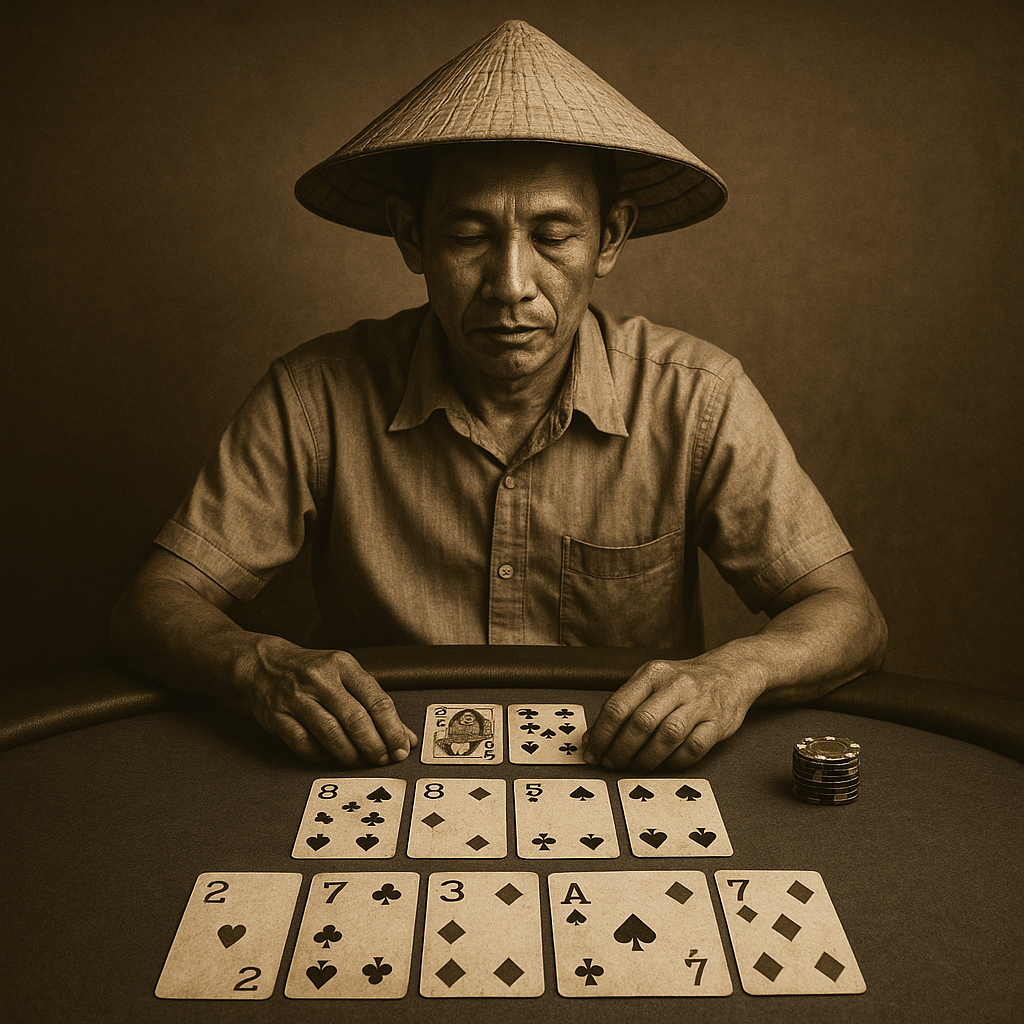
2-7 Pineapple OFC Cultural Traditions: Low Royalties in Southeast Asia

When 2-7 Pineapple OFC emerged from Nikolai Yakovenko’s algorithm in 2014, few predicted this complex lowball variant would conquer Southeast Asian card rooms through a perfect storm of mobile technology, cultural gambling traditions, and regional poker infrastructure. This unique format, which inverts traditional poker logic by rewarding the worst hands in the middle row, found its ideal home among players from Manila to Bangkok who embrace strategic complexity while maintaining deep privacy around individual success. Today’s thriving ecosystem spans from legal Philippine casinos to Vietnamese underground clubs, united by shared appreciation for a game where the coveted 7-5-4-3-2 wheel earns eight royalty points and Fantasyland entry.
Key Takeaways
- 2014 Innovation: Nikolai Yakovenko creates 2-7 Pineapple OFC variant requiring ten-low or better middle hands
- September 2014: Asian Poker Tour introduces OFC to Southeast Asia; Jae Kyung Sim wins first regional championship
- Lowball Scoring: Middle row awards 1-2-4-8 points for 9-8-7-wheel respectively, with wheel enabling Fantasyland
- Mobile Dominance: KKPoker leads with stakes from $0.01 to $1,000+ blinds during Asian peak hours
- Cultural Integration: Regional superstitions around lucky eights and red clothing influence playing styles
- Anonymous Champions: Privacy-focused culture keeps winners undocumented despite massive participation
The Lowball Revolution in Open Face Chinese
2-7 Pineapple OFC fundamentally transforms the traditional game by requiring players to build lowball hands in the middle row while maintaining standard rankings elsewhere. Players must achieve ten-low or better to qualify, avoiding pairs, straights, and flushes that would typically constitute strong hands. The format begins with five face-down cards arranged into three rows (3-5-5 format), followed by four rounds of receiving three cards, keeping two and discarding one.
The scoring system elegantly adapts to lowball principles. According to strategy expert Yakovenko, the middle row awards “one point for 9-low, two for 8-low, four for 7-low, and eight for the perfect wheel” (source). This wheel (7-5-4-3-2) also qualifies for Fantasyland entry, creating dual paths alongside traditional kings-or-better on top.
Strategic complexity emerges from the inverted logic required for middle-hand construction. Aces become toxic as permanent high cards, while traditionally weak holdings gain immense value. The discard mechanic transforms into critical blocking strategy, as players can permanently remove wheel cards opponents desperately need. Research shows that “two-thirds of hands foul when needing two specific low cards on the final draw,” making early planning essential for survival.
Southeast Asia’s Unlikely Poker Journey
Open Face Chinese poker’s path to Southeast Asian dominance began in Finland’s mid-2000s poker rooms before spreading through Russia via Alex Kravchenko, who famously described it as “spreading like a virus” through Eastern European high-stakes games (source). The game reached American shores in 2012, setting the stage for global expansion.
The pivotal Southeast Asian moment arrived in September 2014 when the Asian Poker Tour introduced Pineapple OFC at a major tournament, crowning Jae Kyung Sim as Asia’s first OFC champion. This coincided perfectly with the region’s mobile technology boom and existing affinity for traditional Chinese poker variants.
| Year | Development | Region | Significance |
|---|---|---|---|
| 2014 | Yakovenko creates 2-7 variant | Global (App) | ABC OFC app reports “sizable daily audiences” from Asia |
| Sep 2014 | APT introduces OFC | Philippines | First Asian championship at Resorts World Manila |
| 2019-2020 | KKPoker launches | Southeast Asia | Multiple OFC variants including 2-7 Pineapple |
| 2020-2021 | COVID lockdowns | Regional | Explosive online growth through mobile platforms |
| 2025 | Thailand legalizes poker | Thailand | Potential new venues for OFC variants |
The 2-7 lowball variant specifically gained traction through Yakovenko’s ABC Open Face Chinese Poker app, which reported substantial Asian audiences from Hong Kong, China, and Macau. KKPoker’s 2019 launch accelerated adoption by offering Progressive, Joker, Ultimate, and 2-7 Pineapple formats specifically targeting Asian markets.
Cultural Superstitions Shape Every Hand
Southeast Asian OFC culture blends ancient Chinese gambling traditions with modern poker etiquette, creating unique environments where numerology and superstition influence strategic decisions. The number eight brings prosperity, leading players to favor eight-point wheel bonuses, while wearing red underwear supposedly attracts luck during crucial Fantasyland attempts.
The Philippines leads regional adoption with liberal gambling laws supporting over 20 Manila casinos where OFC thrives. Filipino culture integrates gambling into social fabric, including the tradition of poker at funeral wakes (paglalamay) to keep mourners awake and raise funds for the bereaved family (source). Table etiquette emphasizes respect for elders, with experienced players mentoring newcomers in complex lowball hand hierarchies.
Vietnamese poker operates within fascinating contradictions. While gambling remains technically illegal, Ho Chi Minh City hosts thriving tournament scenes through clubs that circumvent restrictions by focusing on tournament play. The deep-rooted número đề lottery tradition influences how players approach OFC hand construction, with two-digit combinations connecting to animals and deities affecting timing decisions.
Thailand’s poker scene exists primarily through border runs to Cambodian casinos and sophisticated underground networks, though 2025’s recognition of poker as an official sport promises transformation (source). The country has become an unexpected haven for international online grinders, particularly in Phuket and Rawai where expatriate professionals exploit excellent internet infrastructure while enjoying low living costs.
Manila’s Live Dominance Meets Mobile Revolution
Manila stands as Southeast Asia’s undisputed live poker capital, with Entertainment City’s mega-casinos all spreading OFC games. Okada Manila, Solaire Resort, City of Dreams, and Resorts World Manila offer stakes ranging from ₱50/100 ($1/$2) to ₱5,000/10,000 ($100/$200) on weekends. These venues integrate OFC as both tournament format and high-stakes cash game side action.
Cambodia’s ecosystem centers on Phnom Penh’s NagaWorld Casino, operating 24/7 with constant action across multiple stakes. Vietnam’s tournament-only legal framework pushes cash games underground, with venues like Crown Poker Club in Hanoi operating despite technical illegality. Singapore restricts poker to Marina Bay Sands and Resorts World Sentosa, where locals pay substantial entry fees creating exclusive environments.
Online platforms revolutionized accessibility with KKPoker leading through innovative features. The platform offers 17-card “Ultimate Joker” Fantasyland and hosts KKLIVE events across Asia. Peak traffic during Asian evening hours shows thousands competing from $0.01 blinds to extraordinary $1,000+ tables. As detailed in our cryptocurrency poker analysis, SWC Poker enables participation from restrictive jurisdictions through Bitcoin transactions.
The Asian Poker Tour continues pioneering tournament integration, running OFC side events at stops throughout the region. Regular games follow predictable patterns – evening starts at 6 PM local time, weekend stakes doubling, and monthly festivals drawing traveling players across borders. This infrastructure supports tens of thousands of regular players, though exact numbers remain elusive due to the fragmented, often underground nature of the ecosystem.
Privacy Culture Creates Anonymous Champions
Southeast Asian 2-7 Pineapple OFC operates within a paradox of massive participation but minimal public recognition. Unlike Western poker culture that celebrates winners publicly, OFC competitions typically occur within closed club environments where results stay internal. This reflects deeper cultural values around gambling discretion and recreational enjoyment over professional glory.
KKPoker’s KKLIVE events crown OFC champions including specific titles like “KKLIVE Tokyo 2023 OFC Ultimate Joker Champion,” but winner names rarely enter public databases. The platform’s Asia Club Battles feature skilled players representing regional clubs in team competitions, fostering community identity over individual stardom. PPPoker unions organize massive games with hundreds of participants through encrypted messaging apps prioritizing security over publicity.
This anonymity extends to financial success, where substantial winners remain known only within tight-knit communities. Language barriers compound documentation challenges, with strategic discussion happening in Vietnamese, Thai, Tagalog, and Chinese rather than English. The community compensates through alternative recognition systems – club leaderboards, private tournament series, and word-of-mouth reputation within regional networks.
Mentorship relationships transfer knowledge generationally, with successful players teaching proteges in exchange for action stakes or percentage deals. This informal apprenticeship system has produced exceptionally skilled players whose abilities rival any international specialist, even as their names remain unknown outside immediate circles. The structure perfectly aligns with Southeast Asian values prioritizing collective enjoyment and discretion over individual fame.
Frequently Asked Questions
The evolution of 2-7 Pineapple OFC in Southeast Asia demonstrates how poker variants can transcend origins to find perfect cultural homes. From algorithmic innovation to regional phenomenon, this lowball variant thrives within an ecosystem that values strategic depth, community bonds, and discretion over fame. As Thailand prepares for poker legalization and platforms continue innovating, 2-7 Pineapple OFC stands poised for continued growth across a region where thousand-year gambling traditions merge seamlessly with 21st-century poker innovations.
Leave a Reply