Ace to Five Triple Draw Regional Traditions: Lowball in Western US

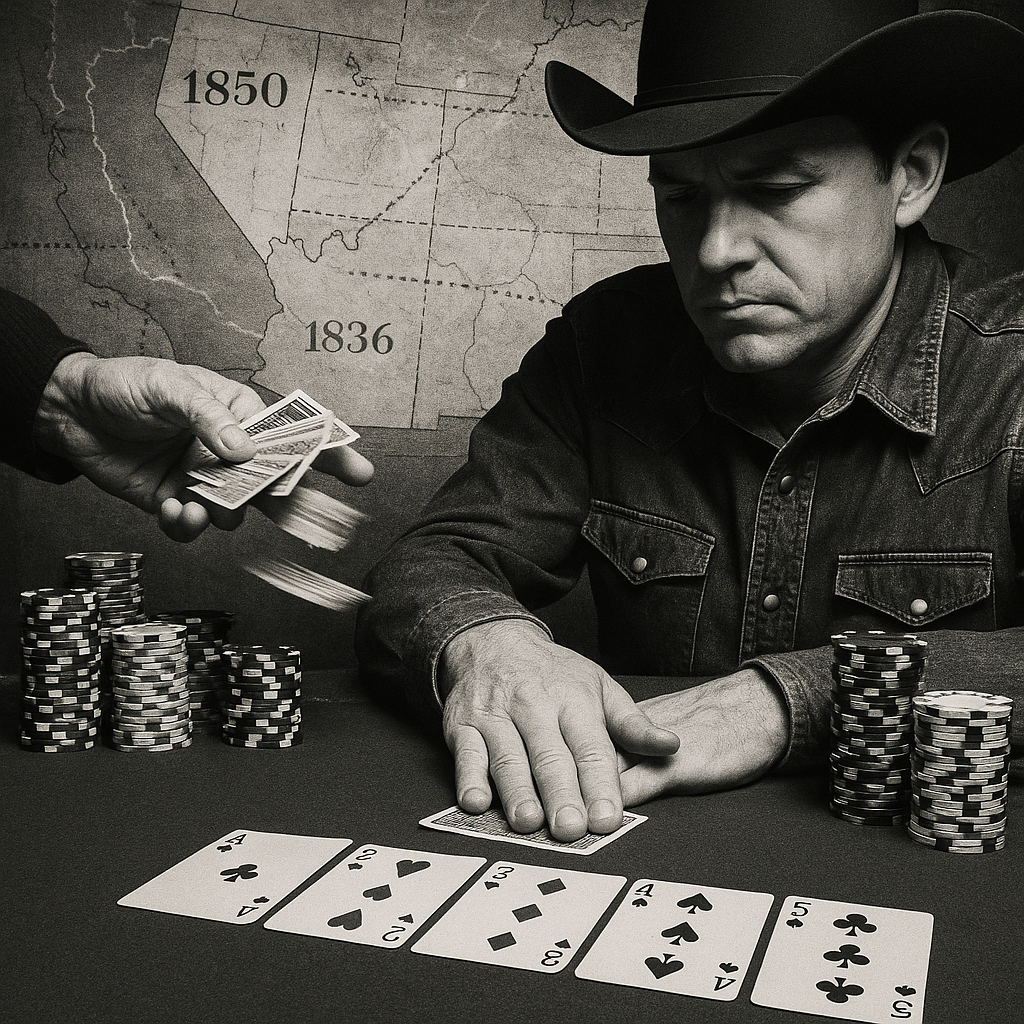
Ace to Five Triple Draw poker represents the evolutionary pinnacle of a uniquely Western American gambling tradition that began with California’s 19th-century legal peculiarities and transformed into one of poker’s most sophisticated variants. The game’s deep roots in California cardroom culture, combined with its spread through Nevada’s tournament scene, have created a distinct regional poker tradition that continues to thrive among serious players and mixed-game specialists throughout the Western United States.
California’s Legal Foundation Shaped Lowball Destiny
The story of A-5 Triple Draw begins with an extraordinary legal quirk in California’s 1879 state constitution, which outlawed all forms of gambling except, conspicuously, draw poker. This omission, reinforced by Attorney General U.S. Webb’s 1911 legal opinion declaring draw poker a “game of skill,” created the foundation for California’s unique cardroom culture. By 1888, historian Hubert Howe Bancroft observed that “California is the place where poker has been most favorably received and industriously cultivated as a science,” establishing the state’s reputation as America’s poker capital.
The Gardena era from the 1930s through the 1980s marked the golden age of California lowball. By 1946, voters officially ratified Gardena as California’s “poker capital,” with six cardrooms generating at least one-third of the city’s revenues by 1952. During the 1970s peak, California lowball (Ace-to-Five single draw) dominated the state’s cardrooms, played with a distinctive 53-card deck including a joker that acted as the lowest card not already in a player’s hand.
The game featured unique regional rules like the “betting sevens” requirement—players with 7-high or better who checked after the draw forfeited rights to any money bet after the draw—creating strategic complexities unknown in other poker variants. This rule encouraged aggressive play and prevented slow-playing strong hands, fundamentally altering optimal strategy compared to standard lowball games.
The transition from single draw to triple draw occurred primarily in the early 2000s, driven by players’ desire for more strategic depth and action. The 2004 introduction of 2-7 Triple Draw at the World Series of Poker marked the format’s legitimization, with A-5 Triple Draw following as a natural companion variant. This evolution reflected the competitive innovation of Western cardrooms, particularly the rivalry between Commerce Casino (opened 1983) and the Bicycle Club (opened 1984), whose constant competition for players drove experimentation with new game formats.
Regional Variations Define Western Poker Identity
California lowball developed distinct characteristics that set it apart from lowball games elsewhere. The inclusion of the joker, known locally as “the fitter,” fundamentally changed hand values and drawing strategies. Northern California cardrooms maintained different betting structures from their Southern California counterparts—Northern rooms kept betting limits constant throughout the hand, while Southern rooms doubled limits after the draw. These regional differences reflected the decentralized nature of California’s cardroom regulation, with over 140 cities hosting legal cardrooms, each potentially implementing slight rule variations.
The California practice of allowing “bet and six raises” in multihanded lowball pots, compared to the standard “bet and four raises” elsewhere, created more aggressive gameplay and larger pots. The state’s collection fee structure, where cardrooms charge per hand or hourly rather than taking a percentage rake, influenced optimal strategies and made certain aggressive plays more profitable than in Nevada’s rake-based games.
Modern A-5 Triple Draw, played without the joker and featuring three drawing rounds with four betting streets, represents a standardization that accommodates tournament play while maintaining strategic complexity. The game typically uses blinds rather than antes and follows more conventional betting structures, though California cardrooms often maintain their traditional rule variations in cash games.
Key California Lowball Innovations
- 53-card deck with joker acting as perfect low card
- “Betting sevens” rule requiring aggression with strong hands
- Collection fee structure instead of rake
- Extended raising caps (six raises vs. standard four)
- Regional betting structure variations between North and South
Historic Cardrooms Anchor the Western Lowball Scene
Commerce Casino in Los Angeles, with its 374 tables making it the world’s largest cardroom, continues to offer A-5 Triple Draw during major tournament series like the LA Poker Classic. The venue’s Mixed Triple Draw events during the January-March festival period attract specialists from across the country, maintaining the game’s presence in modern tournament poker.
The Bicycle Casino in Bell Gardens stands out as the most consistent venue for both traditional California lowball and Triple Draw variants, explicitly listing both games in their regular offerings and maintaining the game’s presence even as other venues have shifted focus to Hold’em and Omaha. The Bike’s commitment to preserving lowball traditions while embracing modern formats makes it the spiritual home of California lowball.
Oaks Card Club in Emeryville represents the strongest historical continuity, operating since 1895 and maintaining traditional lowball games including some player-dealt formats that preserve the game’s earliest traditions. The venue’s mix of house-dealt and player-dealt lowball games offers a unique window into poker’s past while serving the modern mixed-game community.
Bay 101 in San Jose, Lucky Chances in Colma, and Hawaiian Gardens Casino have largely shifted away from regular lowball offerings, focusing instead on more popular Hold’em and Omaha variants. The Normandie Casino (formerly Larry Flynt’s Lucky Lady) in Gardena, the last surviving cardroom from lowball’s golden era, ironically offers little lowball action today, symbolizing the game’s transformation from mainstream staple to specialized variant.
Nevada’s contribution centers on tournament play, with the WSOP at Paris/Horseshoe Las Vegas hosting the premier A-5 Triple Draw competitions. The Venetian spreads mixed games including triple draw variants in both low-limit rotations and high-stakes rooms, though 2-7 Triple Draw has become more prevalent than A-5 in Nevada venues.
| Venue | Location | Tables | A-5 Availability | Notable Features |
|---|---|---|---|---|
| Commerce Casino | Los Angeles, CA | 374 | Tournament Series | LA Poker Classic Mixed Events |
| Bicycle Casino | Bell Gardens, CA | 185 | Regular Games | Both California & Triple Draw |
| Oaks Card Club | Emeryville, CA | 35 | Traditional Games | Player-Dealt Options |
| WSOP Vegas | Las Vegas, NV | Seasonal | Tournament Events | Mixed Triple Draw Championships |
| Venetian | Las Vegas, NV | 59 | Mixed Games | High-Stakes Mixed Rotations |
Legendary Players Embody Western Lowball Tradition
Billy Baxter, the undisputed “Lowball King,” won all seven of his WSOP bracelets in lowball variants between 1975 and 2002. His 1986 legal victory in William E. Baxter Jr. vs. the United States established “Professional Poker Player” as a legitimate profession for tax purposes, fundamentally changing poker’s legal standing. Baxter’s mentorship of players like John Monnette and his famous backing of Stu Ungar’s 1997 WSOP Main Event comeback exemplify the tight-knit lowball community’s collaborative spirit.
John Monnette from Palmdale, California, represents the modern evolution of lowball expertise. His five WSOP bracelets in five different disciplines, including the 2017 $10,000 No-Limit 2-7 Lowball Draw Championship for $256,610, showcase the versatility required of contemporary mixed-game specialists. Known early as “Angry John” before mellowing into “Affable John,” Monnette credits Billy Baxter for teaching him 2-7 lowball, demonstrating the generational knowledge transfer within the community.
Other notable Western lowball specialists include:
- Frank Kassela – Multiple lowball bracelet winner who calls himself “one of the world’s best recreational players”
- Steve Zolotow – “The Bald Eagle,” longtime Las Vegas resident and lowball advocate
- Benny Glaser – British by birth but Western high-stakes fixture with five WSOP bracelets
- Puggy Pearson – Pioneer of tournament format who excelled at lowball games
- Stu Ungar – Dominated both gin rummy and lowball with mathematical precision
California Lowball Culture Shaped Modern Poker
The distinct California lowball culture that flourished from the 1960s through the 1990s created traditions and practices that continue influencing poker today. The state’s emphasis on draw poker variants, driven by legal necessity, fostered a sophisticated player base comfortable with complex hand reading and drawing decisions. The collection fee structure rather than rake encouraged longer sessions and created unique strategic considerations that distinguished California games from those elsewhere.
The joker’s inclusion in California lowball created a regional variant requiring different strategic approaches. Players had to account for 53 cards rather than 52, with the joker serving as a powerful wild card that could complete otherwise marginal hands. This variation never gained traction outside California, illustrating how regional preferences and traditions can create lasting game variations.
California’s lowball culture also emphasized etiquette and traditions specific to draw games. The practice of announcing draws, protecting hands during the drawing process, and specific protocols for exposing cards all developed within this environment. These customs transferred to triple draw variants, maintaining continuity with the game’s historical roots.
Evolution from Single Draw to Triple Draw
The transformation from single draw lowball to triple draw formats occurred gradually through the late 1990s and early 2000s. High-stakes mixed games in California cardrooms began experimenting with multiple draw rounds to create more action and strategic complexity. The format addressed several limitations of single draw lowball:
- Reduced variance through multiple drawing opportunities
- Created more betting rounds for skilled players to leverage their edge
- Generated larger pots appealing to both players and cardrooms
- Allowed for more sophisticated bluffing and hand-reading opportunities
The 2004 WSOP introduction of 2-7 Triple Draw legitimized the triple draw format, with A-5 Triple Draw following as players sought variety. The last single draw A-5 Lowball WSOP event in 2004, won by Norm Ketchum for $84,500, marked the end of an era. Triple draw’s four betting rounds and three drawing opportunities created a game with enough complexity to satisfy serious players while maintaining lowball’s fundamental appeal.
The transition reflected broader changes in poker culture. As Texas Hold’em exploded in popularity following Chris Moneymaker’s 2003 WSOP victory, traditional draw games needed innovation to maintain relevance. Triple draw provided that innovation while preserving lowball’s essential character, creating a bridge between poker’s past and future.
Current Tournament Landscape Sustains the Tradition
The 2024 WSOP Mixed Triple Draw event attracted 371 entrants and generated an $825,475 prize pool, with Patrick Moulder winning $177,045. This healthy field size demonstrates continued interest despite the game’s specialized nature. The 2025 WSOP’s introduction of T.O.R.S.E. format, replacing Hold’em with 2-7 Triple Draw in the traditional H.O.R.S.E. rotation, signals continued institutional support for triple draw variants.
The WPT World Championship at Wynn Las Vegas has embraced mixed games, offering $600 buy-in Mixed Triple Draw events with $50,000 guarantees. The 202 entries in 2024’s event show strong participation at accessible price points. California’s tournament scene centers on the Commerce Casino’s LA Poker Classic, which features mixed triple draw events during its January-March run.
Major tournament series increasingly include A-5 Triple Draw in mixed game rotations. The 8-Game mix, which includes A-5 Triple Draw alongside seven other variants, has become a standard offering at major festivals. The Poker Players Championship, with its $50,000 buy-in, represents the pinnacle of mixed-game play and consistently features both A-5 and 2-7 triple draw variants.
2025 WSOP Triple Draw Schedule
- Event #56: $2,500 Mixed Triple Draw Lowball (June 23-25)
- Event #78: $10,000 2-7 Triple Draw Championship (July 7-9)
- Multiple 8-Game and 10-Game events featuring A-5 Triple Draw
- T.O.R.S.E. format debut replacing Hold’em with 2-7 Triple Draw
Unique Customs Persist in Western Cardrooms
Western cardrooms maintain distinctive practices that set them apart from poker rooms elsewhere. California’s collection fee structure, charging per hand or hourly rather than taking rake, creates different strategic incentives. Players can be more aggressive knowing that pot size doesn’t affect the house’s take, leading to looser, more action-oriented games.
The tradition of player-dealt games, still found at venues like Oaks Card Club, preserves poker’s earliest customs. Players take turns dealing, creating a more intimate, social atmosphere while reducing labor costs. This practice, largely extinct elsewhere, maintains a direct connection to poker’s 19th-century origins.
High-stakes private games in Los Angeles and the Bay Area continue the tradition of mixed-game rotations including A-5 Triple Draw. These games, often held in country clubs or private residences, represent the pinnacle of California poker culture, where substantial sums change hands among tight-knit groups of experienced players.
Online Poker’s Limited but Growing Influence
The absence of legal online poker in California has limited digital training opportunities for A-5 Triple Draw. Unlike Hold’em players who can access sophisticated solvers and extensive online play, triple draw enthusiasts rely more heavily on live experience and peer learning. Nevada’s WSOP.com offers limited triple draw action, while sweepstakes sites provide practice opportunities without real money stakes.
Training resources remain sparse compared to mainstream variants. While some sites offer 2-7 triple draw content, A-5 specific training materials are rare. The lack of commercial solvers for triple draw creates an information asymmetry—players must develop strategic understanding through experience rather than studying optimal solutions.
This limited online presence paradoxically helps preserve the game’s traditional character. Without solver-driven homogenization, regional styles and individual approaches remain viable. The emphasis on live play maintains the social aspects that have always characterized lowball culture.
Master A-5 Triple Draw Strategy
Ready to improve your lowball game? Explore our comprehensive guides:
Stories from the Western Lowball Community
The Western lowball community treasures its colorful history and characters. Billy Baxter’s backing of Stu Ungar for the 1997 WSOP Main Event, despite Ungar’s personal demons, resulted in a million-dollar score split between them—a story that epitomizes both the trust and risk inherent in poker’s backing arrangements.
John Monnette’s transformation from “Angry John” to “Affable John” after meeting his wife Diana reflects the game’s evolution from rough-edged gambling to professional sport. His ability to maintain elite performance while prioritizing family represents the modern professional approach.
Stories of marathon sessions at the Oaks Card Club, where lowball games might run for days with players sleeping in shifts, capture the dedication of true enthusiasts. The legendary “$100,000 lowball game” that supposedly ran at the Commerce Casino in the late 1990s, though difficult to verify, has become part of poker mythology.
The Game’s Trajectory in Western Poker Rooms
A-5 Triple Draw occupies a stable niche within Western poker culture. While not experiencing explosive growth, it maintains consistent tournament fields and dedicated cash game action at higher stakes. The 371 entries in the 2024 WSOP mixed triple draw event suggests healthy participation among serious players.
California’s 82 licensed cardrooms with 2,200 total tables provide the infrastructure for continued lowball play, even as most venues focus on more popular variants. The concentration of tables in Los Angeles County (1,207 tables) and the Bay Area ensures that metropolitan areas can sustain specialized games.
The game faces challenges including limited training resources, higher skill requirements that deter casual players, and less media coverage than mainstream variants. However, its inclusion in prestigious events like the Poker Players Championship and consistent WSOP presence ensures continued visibility and legitimacy.
Preserving Lowball Heritage While Embracing Evolution
The Western United States remains the global center for A-5 Triple Draw poker, with California’s unique legal history and cardroom culture providing the foundation for this specialized variant’s continued existence. From the Gardena cardrooms of the 1970s to today’s mixed-game rotations at the Commerce Casino and WSOP, the game has evolved while maintaining its essential character.
The transition from single draw California lowball with its joker and distinctive rules to standardized triple draw format represents poker’s ability to adapt while preserving tradition. Modern players like John Monnette carry forward the legacy of pioneers like Billy Baxter, ensuring that knowledge and culture transfer across generations.
As poker continues evolving with online training tools and solver technology, A-5 Triple Draw’s relative immunity to these influences helps preserve a more traditional, intuitive approach to the game. The Western lowball community, concentrated in California’s vast cardroom network and Nevada’s tournament scene, maintains this important piece of poker heritage while continuing to innovate within its framework.
The game’s future depends not on mass popularity but on the continued dedication of a passionate community that values strategic depth, historical continuity, and the unique culture that has developed around Western lowball poker over more than a century. Whether played with a joker in Gardena or without one at the WSOP, A-5 Triple Draw remains a testament to the enduring appeal of poker’s most fundamental format: draw poker, where skill, psychology, and tradition converge in every hand.
Key Takeaways: Western A-5 Triple Draw Traditions
- 1879: California constitution creates legal loophole allowing draw poker
- 1911: Attorney General declares draw poker a “game of skill”
- 1946: Gardena becomes California’s official “poker capital”
- 1970s: California lowball reaches peak popularity with 53-card deck
- 2000s: Triple draw format emerges from high-stakes mixed games
- 2004: WSOP introduces triple draw events, legitimizing the format
- 2024: 371 players compete in WSOP Mixed Triple Draw event
- 2025: T.O.R.S.E. format debuts, replacing Hold’em with 2-7 Triple Draw
Frequently Asked Questions
About the Author
Mixed Game Masters Editorial
Published: July 6, 2026 | Categories: Tournaments & Events, Draw & Lowball
Mixed Game Masters is the premier resource for non-Hold’em poker strategy, tournament coverage, and mixed game education. Our editorial team consists of experienced players and poker historians dedicated to preserving and sharing the rich history of poker’s most challenging variants.
We provide comprehensive coverage of draw games, lowball variants, and mixed game formats, helping players of all levels improve their skills beyond traditional No-Limit Hold’em.
Leave a Reply