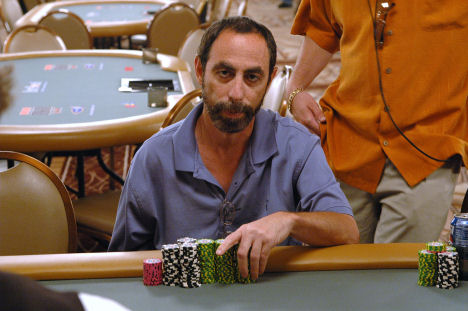
Barry Greenstein Spotlight: Philanthropy and Poker Legacy

When Barry Greenstein donated $440,000 from his first major tournament victory in 2003, giving exactly $1,000 to each of Children Incorporated’s 440 employees worldwide, he forever changed poker’s relationship with philanthropy. The 70-year-old legend, who has given over $5 million to charity while earning three WSOP bracelets and mentoring future champions, proved that excellence at mixed games could serve a higher purpose beyond personal profit.
From Silicon Valley to Vegas High Stakes
Barry Greenstein’s journey to poker greatness began in Chicago on December 30, 1954, where his father Jack taught him cards at age four. By thirteen, Greenstein was already winning $30-50 nightly in home games, displaying the mathematical genius that would earn him a computer science degree from the University of Illinois in just three years. After spending nearly a decade pursuing a PhD in mathematics—completing his dissertation but never defending it—he joined Symantec as one of five founding members in 1984.
At Symantec, Greenstein single-handedly created Q&A, a revolutionary database and word processing program that industry magazines unanimously named “Product of the Year” in 1986″ (source). When Bill Gates personally visited to offer double his salary, Greenstein declined, stating “I don’t work for money. I work for my projects.”
The turning point came in 1991 when family medical crises struck—his wife Donna was diagnosed with multiple sclerosis and his daughter needed a liver transplant. Needing flexible hours and increased income, Greenstein left tech at age 36 to play poker professionally, initially grinding 12-hour sessions at California’s Cameo Club.
His transition proved remarkably successful. During the 2003 WSOP month alone, Greenstein won over $5 million in cash games—more than double Chris Moneymaker’s Main Event victory. As a regular in Bellagio’s legendary “Big Game” alongside Doyle Brunson, Phil Ivey, and Chip Reese, Greenstein typically bought in for $200,000-$300,000 in games reaching $4,000/$8,000 limits.
Three Bracelets Across Multiple Variants
Greenstein’s tournament breakthrough came dramatically in March 2003 at Larry Flynt’s $1 million Seven-Card Stud event, where he won $770,000 and immediately donated $440,000 to Children Incorporated. This unprecedented act of generosity—giving away more than half his winnings—instantly earned him the “Robin Hood of Poker” moniker.
| Year | Event | Prize | Variant |
|---|---|---|---|
| 2004 | $5,000 No-Limit Deuce-to-Seven Draw | $296,200 | Draw |
| 2005 | $1,500 Pot-Limit Omaha | $128,505 | PLO |
| 2008 | $2,500 Razz | $157,619 | Razz |
His biggest career score came at the 2004 WPT Jack Binion World Poker Open, winning $1,278,370—the majority of which went to charity. With 149 WSOP cashes totaling $3.4 million and 263 overall tournament cashes worth $8.6 million (source), Greenstein’s consistency across decades remains remarkable.
In 2008, he nearly captured WSOP Player of the Year, finishing second to Erick Lindgren after cashing six times for $768,461, including a fifth-place finish in the prestigious $50,000 H.O.R.S.E. Championship worth $355,200.
Children Incorporated and Funding Dreams Globally
The Robin Hood Legacy
Total Charitable Donations: $3-5 million (estimated)
Primary Beneficiary: Children Incorporated (15,000 children across 21 countries)
Notable Projects: Barry Greenstein Gymnasium at Rosebud Sioux Reservation, Computer labs at Chicago schools
Greenstein’s relationship with Children Incorporated transformed both the charity and his own life purpose. After that initial 2003 donation, his commitment went beyond writing checks—he funded entire infrastructure projects, including the Barry Greenstein Gymnasium at the Rosebud Sioux Reservation in South Dakota, which opened in October 2003 to serve 140 Lakota Sioux children (source).
“It really started as a result of my bad parenting,” Greenstein admitted. “I had spoiled my kids and I was trying to show them that other kids aren’t as fortunate as they are.” This honest self-reflection evolved into systematic giving. Initially donating 100% of each tournament win immediately after cashing, he adjusted in 2008 to donating net earnings annually as tournament expenses grew.
His other beneficiaries included Bogan High School in Chicago (funding “The Barry Greenstein Computer Room”), the University of Illinois mathematics department, and Rainbow Shelter for battered women and children. Greenstein kept 400+ thank-you letters from Children Incorporated employees across all 21 countries, many describing his $1,000 bonus as “a miracle from God.”
Ace on the River Reshapes Poker Literature
Published June 30, 2005, by Last Knight Publishing, “Ace on the River: An Advanced Poker Guide” revolutionized poker literature by transcending traditional strategy books. Rather than focusing solely on hand ranges and betting patterns, Greenstein’s 316-page work explored the psychological, ethical, and lifestyle aspects of professional poker.
The book featured high-quality color photographs throughout and included deeply personal elements like an emotional apology to his children in the dedication. Phil Ivey praised it saying, “Other players don’t think about poker like Barry does,” while Doyle Brunson noted, “This book contains a lot of stuff I knew but had never seen written” (source).
Greenstein’s unique tradition of giving autographed copies to players who eliminated him from tournaments, complete with hand details, turned the book into a coveted trophy among professionals. In 2011, he published “The Badugi Chapter,” a 24-page guide that became the definitive text on the Korean draw variant.
A Poker Family and Championship Mentorship
After gaining custody of six children following his divorce in the early 1990s, Greenstein raised them as a single father while building his poker career. His stepson Joe Sebok, whom he raised from age six, became a successful professional with over $1.8 million in tournament winnings, including two WSOP final tables in 2005. The pair’s “Bear” and “Cub” nicknames reflected their close bond, collaborating on PokerRoad and appearing together in tournaments.
Beyond family, Greenstein’s mentorship shaped numerous careers. He taught former girlfriend Mimi Tran poker in exchange for Vietnamese lessons, helping launch her professional career. His influence on Phil Ivey, whom he considers history’s best player, included teaching him about variance and the mathematics of “running it once” versus multiple times.
Appearing in all seven seasons of High Stakes Poker—one of only four players to do so—Greenstein demonstrated professional composure even in brutal moments, like losing a $919,600 pot to Tom Dwan with pocket aces versus king-queen (source).
Poker Hall of Fame and Enduring Influence
Greenstein’s 2011 Poker Hall of Fame induction recognized not just his three WSOP bracelets and two WPT titles, but his transformative impact on poker’s image and culture (source). Doyle Brunson summarized his legacy perfectly: “Although Barry is in my top ten all-time best poker players, I respect him most for what he does outside the poker world.”
His analytical approach influenced poker’s broader culture during its boom period. “I have played with the greatest players of all time,” Greenstein observed, “and I cannot see anyone I have ever played with who is as good at knowing what the other players are doing as Phil Ivey.”
His famous “lol donkaments” comment on High Stakes Poker generated $55,000 in charitable donations from the poker community, exemplifying how his personality could transform even casual moments into philanthropic opportunities.
Still Dealing at 70 with Timeless Wisdom
Barry Greenstein remains actively engaged with poker at age 70, competing in the 2025 WSOP where he was among the final three Hall of Fame bounties remaining in Event #92 (source). His July 2024 cash of $8,042 marked his 263rd recorded tournament score, demonstrating remarkable longevity in a game increasingly dominated by younger players utilizing solver-based strategies.
While his PokerStars sponsorship has been reduced to “more like a stipend,” he continues sharing wisdom through podcasts and social media, focusing primarily on mixed games rather than No-Limit Hold’em. His teaching philosophy emphasizes mistake minimization over flashy plays, drawing from his bridge expertise: “I’ve always said that the game of bridge is better than all the players. I took that philosophy to poker.”
Master Mixed Games Like Barry Greenstein
Explore the variants where Greenstein earned his bracelets:
Frequently Asked Questions
The Legacy Lives On
From creating groundbreaking software at Symantec to revolutionizing charitable giving in poker, Barry Greenstein proved that excellence in cards could coexist with humanitarian purpose. The numbers define his poker achievements—$8.6 million in tournament earnings, 149 WSOP cashes, victories in multiple variants—but his true legacy lies in demonstrating that professional gambling could fund children’s education, build gymnasiums on reservations, and inspire an entire generation to think beyond the felt.
As he once said, “I never loved poker. I did it because I could make money easier than other jobs.” Yet through that pragmatic approach, Barry Greenstein transformed both the game and countless lives, earning his place not just as poker royalty, but as the sport’s most consequential philanthropist. His influence on razz strategy, pot-limit Omaha play, and mixed game excellence continues to shape how the games are played today.
Key Takeaways: Barry Greenstein’s Poker Legacy
- $5+ Million: Total charitable donations from poker winnings
- 3 WSOP Bracelets: Across three different poker variants (Draw, PLO, Razz)
- $8.6 Million: Career tournament earnings with 263 cashes
- 149 WSOP Cashes: Demonstrating consistency across decades
- 2011: Inducted into Poker Hall of Fame
- “Ace on the River”: Revolutionary poker book published in 2005
- Children Incorporated: Primary beneficiary supporting 15,000 children globally
About the Author
Mixed Game Masters Editorial
Published: December 2, 2026 | Categories: Player Profiles, Mixed Games
Mixed Game Masters is the premier resource for non-Hold’em poker strategy, tournament coverage, and mixed game education. Our editorial team consists of experienced players and poker historians dedicated to preserving and sharing the rich history of poker’s most challenging variants.
We provide comprehensive coverage of draw games, lowball variants, and mixed game formats, helping players of all levels improve their skills beyond traditional No-Limit Hold’em.
Leave a Reply