Limit Texas Hold’em Cultural Impact: Midwest Casino Traditions

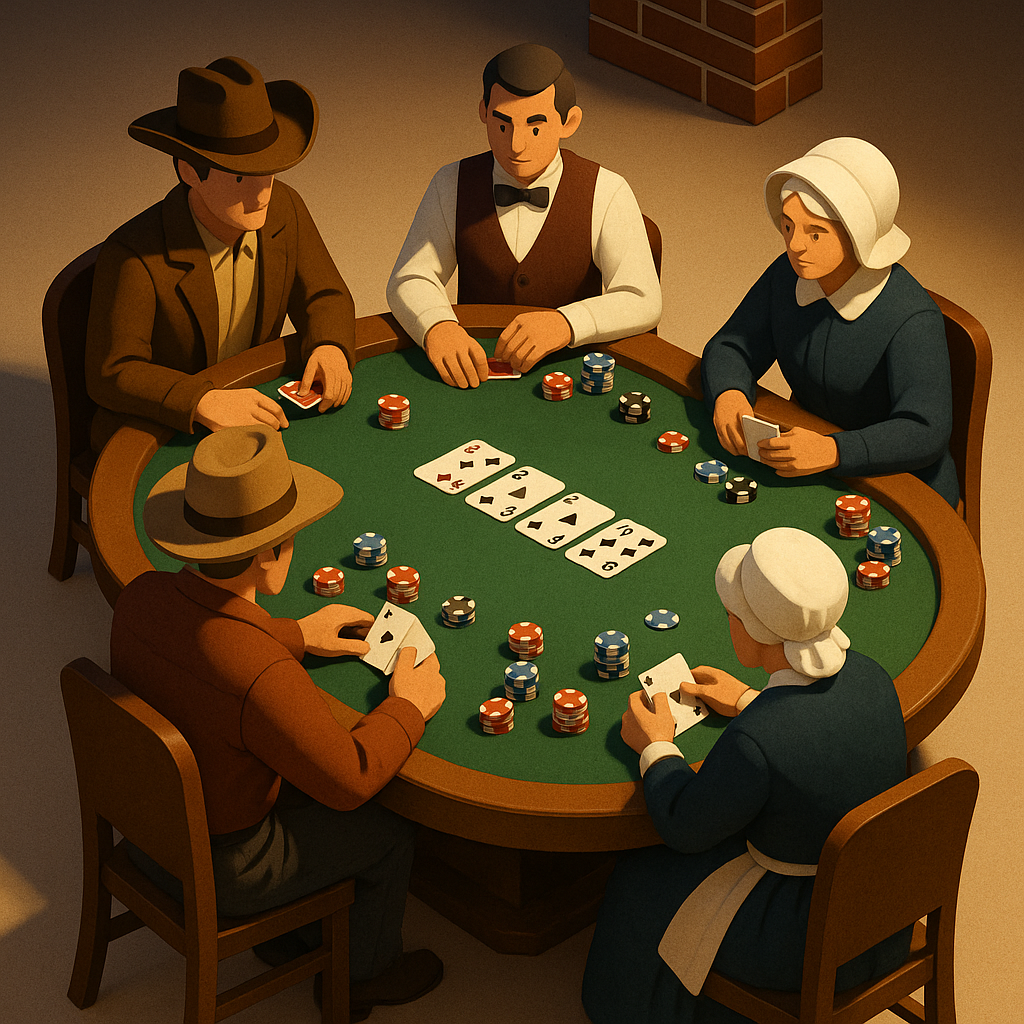
Limit Texas Hold’em occupies a unique position in Midwest casino culture—a game that survived and sometimes thrived while the rest of the poker world rushed toward no-limit formats. This persistence reflects deeper cultural values of community, tradition, and measured risk that define the region’s approach to gambling, creating a distinctive poker ecosystem found nowhere else in America.
Riverboat Origins: The Foundation of Midwest Poker
The story begins on April 1, 1991, when Iowa’s Dubuque Casino Belle made its maiden voyage, marking the start of riverboat gambling in the Midwest. Iowa’s pioneering Excursion Gambling Boat Act established the template that would spread across eight states, creating a patchwork of regulations that inadvertently preserved limit poker when other regions abandoned it.
The early restrictions were severe: $5 minimum wagers, $200 loss limits per excursion, mandatory sailing rather than dockside gambling. These constraints created an environment where controlled, predictable betting structures made perfect sense. Unlike Las Vegas or Atlantic City, where high-roller culture dominated, Midwest riverboats catered to recreational players seeking entertainment rather than life-changing wins.
Missouri’s journey proved particularly complex. After Proposition A passed in 1992, the state Supreme Court ruled games of chance required a constitutional amendment. Amendment 3 failed by just 0.16% in April 1994 before Amendment 6 finally passed that November. Missouri’s initial $500 loss limit per excursion, not eliminated until 2008, made limit games particularly suitable for the regulatory framework.
Canterbury Park: The Midwest’s Limit Poker Fortress
Canterbury Park in Shakopee, Minnesota, emerged as the undisputed capital of Midwest limit culture, largely due to a regulatory quirk that prohibits true no-limit cash games. This legal restriction, unique among major U.S. markets, created perfect conditions for limit poker to flourish.
The poker room, claiming to be the largest in the Midwest with over 30 tables, maintains around-the-clock action in games ranging from $3/$6 (the most popular stake with 2-4 tables constantly running) to high-stakes $50/$100 mixed games on weekends. The room’s atmosphere reflects what players call “Minnesota Nice”—an unusually courteous, reserved culture where disputes are rare and resolved amicably.
Canterbury Park by the Numbers
30+ tables running 24/7
$3/$6 Limit Hold’em: Most popular game with 2-4 tables constantly
$30/$60 games: Feature “a mix of the best and worst limit players anywhere”
$50/$100 mixed games: Weekend high-stakes action
18+ age requirement: Lower than most U.S. casinos
Players describe the limit games as “the most honest, transparent game of poker imaginable,” where mathematical precision matters more than psychological warfare. The $30/$60 games reportedly feature diverse skill levels, creating an ecosystem where serious players and recreational gamblers coexist peacefully. This balance proves crucial for game sustainability—professionals need recreational players, while casual players appreciate the predictable betting structure.
Senior Citizens and Social Infrastructure
The demographic story of Midwest limit poker centers on senior citizens, who comprise almost half of all casino visitors. For this population, limit Hold’em offers more than entertainment—it provides vital social connection and community.
The game’s structured betting limits reduce volatility, allowing retirees to play longer sessions with smaller bankrolls. Typical buy-ins run $60 for $2-4 games and $100 for $3-6, making poker accessible on fixed incomes. These low-stakes games—$2-4, $3-6, and $4-8—serve crucial social functions beyond gambling.
| Metric | Statistic | Impact |
|---|---|---|
| Casino Visitor Demographics | ~50% seniors | Drives demand for predictable games |
| Primary Motivations | 38% cite loneliness/boredom | Poker as social infrastructure |
| Typical Buy-ins | $60-$100 | Accessible on fixed incomes |
| Session Length | 4-6 hours average | Social interaction priority |
| Game Preference | 85% prefer limit over no-limit | Predictability over volatility |
Regular players form consistent communities around specific games and time slots, developing friendships and support networks that combat isolation. One veteran described it: “We’re not just playing cards—we’re checking on each other, celebrating birthdays, mourning losses. This table is our community center.”
The appeal extends beyond social aspects. Players describe limit as “science vs. art form”—more methodical and calculated than no-limit’s psychological battles. Mistakes cost less, the pace allows conversation between hands, and transparent betting patterns create what veterans call “honest poker” where pot odds and implied odds trump aggressive posturing.
Personalities Who Shaped the Culture
Jason Senti became “the face of Minnesota poker” after finishing 7th at the 2010 WSOP Main Event for $1.4 million. An electrical engineer from North Dakota who moved to Minneapolis, Senti represented the region’s blend of technical skill and approachability. After his WSOP success, he immediately won the Mid-States Poker Tour at Canterbury Park, then advocated for online poker rights before becoming CEO of Phil Galfond’s Run It Once Poker.
Perhaps no figure better captured Midwest poker’s unique character than Steve Albini, the legendary Chicago music producer who won two WSOP bracelets. During his 2022 bracelet win, Albini brought a brass bell to the final table, ringing it after winning hands. But when he noticed it irritating opponents, he stopped. “For most poker players, trying to destroy their opponents, this was a feature of the bell,” a friend recalled. “For Steve… He didn’t want to piss off, or even ’tilt’ his opponents. He just wanted to beat them.”
The Mid-States Poker Tour itself emerged from this culture. Founded in 2009 as the Minnesota State Poker Tour, its first event at Canterbury Park drew 130 players, with 20-year-old John Dragich winning $34,765. The tour expanded across the Midwest, eventually awarding over $201 million in prizes while maintaining its regional character and reasonable buy-ins.
Home Games: Preserving Poker’s Communal Roots
Beyond the casinos, Midwest limit culture thrives in home games ranging from kitchen tables to VFW halls. These games represent poker’s bedrock—multigenerational gatherings where “kids stood next to somebody or sat in a lap, and learned which hands beat which.” Families used whatever was available, even writing “4♥” on a joker with magic marker to complete a 51-card deck.
VFW and American Legion posts became significant venues, hosting charity tournaments where “the camaraderie aspect takes top priority.” Veterans gather to play cards while “exchanging shared experiences in a deployed environment and telling war stories.” These games serve dual purposes: fundraising for veteran services and providing crucial social connection.
The Underground Scene Persists
Chicago maintains a sophisticated network of off-the-books rooms operating nightly, continuing traditions dating to Nelson Algren’s era. One operator explained their legitimacy strategy: “I hire an off-duty police officer to work the door. I sponsor their softball league. Cops get a $25 chip.” These rooms serve diverse communities, with games “in their native language—the Koreans and Assyrians have regular games.”
Church basements host legal charity poker across the region, particularly in Illinois. Despite stereotypes, organizers note that “most Christians I know have no problem with gambling.” These events feature slower tournament structures accommodating recreational players, with buy-ins from $20 early bird games to $150 deepstacks.
Kansas City’s “Monday Night Poker,” a $40 home game started in 2003 to watch football, produced WSOP bracelet winners Jeff Tebben, Grant Hinkle, Blair Hinkle, and James Mackey. Despite this success, players note that “people constantly assume that MNP is some sort of high-roller league, but it couldn’t be further from the truth.”
Unique Regulations Created Unique Culture
The evolution from actual riverboats to land-based casinos profoundly shaped limit culture. Initially, players boarded at scheduled times for “phantom cruises,” creating unique gaming conditions on cramped multi-level paddlewheelers with “little comfort, lots of action.” The Johnson Act prevented Great Lakes gambling until Congress amended it in 1996, while states gradually relaxed requirements from mandatory cruising to “boats in moats” to permanent docking.
These regulatory frameworks created interstate competition. Illinois’s no-loss-limit advantage over Missouri attracted players across borders. Indiana’s lower tax rates drew Illinois players. Iowa’s early mover advantage diminished as neighbors liberalized their rules. This patchwork encouraged innovation while preserving regional differences that made Midwest poker distinctive.
Other significant venues developed their own limit poker cultures:
- Horseshoe Hammond in Indiana served Chicago-area players with higher-stakes games and the credibility of the Horseshoe brand
- Motor City Casino in Detroit operated as the city’s largest poker room until its closure in August 2024
- Prairie Meadows in Iowa became known as a mixed game haven
- Grand Victoria Casino in Elgin, Illinois, maintained strong limit action serving Chicago’s western suburbs
- Various Ameristar properties maintained limit games across multiple states
Current Challenges and Future Outlook
The no-limit boom following Chris Moneymaker’s 2003 WSOP victory fundamentally altered poker’s landscape. The Unlawful Internet Gambling Enforcement Act of 2006 and 2011’s “Black Friday” eliminated the online player development pipeline. COVID-19 delivered another devastating blow, with all casinos closing in March 2020 and many poker rooms never reopening.
Economic pressures compound these challenges. Slot machines generate significantly more profit per square foot than poker rooms, which require dealers, floor staff, and substantial overhead. Lower rake in limit games compared to no-limit makes them even less attractive to casino operators. An industry-wide dealer shortage further strains operations.
Master Limit Hold’em Strategy
Ready to improve your limit game? Explore our comprehensive guides:
Yet limit Hold’em persists in select Midwest venues. Canterbury Park maintains robust action due to Minnesota’s legal structure. Hollywood Casino Aurora in Illinois explicitly advertises limit games, operating 9:00 AM to 3:00 AM daily. Hollywood Casino St. Louis offers various limits of both limit and no-limit Hold’em. While many rooms have closed—including Motor City Casino’s August 2024 shutdown—others recognize limit games’ value for player retention and community building.
A Culture Defined by Community Over Competition
What distinguishes Midwest limit Hold’em isn’t just the game mechanics but the cultural values it embodies. The region’s agricultural heritage, with farmers as natural risk-takers who understand calculated gambles, influenced a different gambling psychology. The emphasis on “Minnesota Nice”—polite friendliness and aversion to confrontation—creates poker rooms where social interaction matters as much as winning.
Regular players describe an environment where “stories (both true and tall as the Empire State Building) flowed across the table, and into hearts and minds forever.” The game serves as social glue for diverse communities: auto industry workers in Detroit, agricultural workers in Iowa and Minnesota, veterans in VFW halls, seniors in casino poker rooms, and families around kitchen tables.
This culture produced players who succeed at the highest levels while maintaining Midwest values. The transition from riverboats to modern casinos, from home games to tournament series, from limit to no-limit dominance, hasn’t erased this foundational culture. Instead, it adapted and evolved, maintaining spaces where poker remains about community connection rather than pure profit maximization.
Key Takeaways: Midwest Limit Hold’em Culture
- 1991: Iowa’s Dubuque Casino Belle launches riverboat gambling era
- Canterbury Park: Remains America’s limit poker capital due to Minnesota regulations
- Demographics: Senior citizens comprise ~50% of players, seeking social connection
- Home Games: Kitchen tables to VFW halls preserve poker’s communal roots
- Regulatory Quirks: State-specific rules created unique playing conditions
- Cultural Values: “Minnesota Nice” and community matter more than competition
- Future: Economic pressures threaten but don’t eliminate the tradition
The future remains uncertain. Economic pressures, changing demographics, and industry consolidation threaten remaining limit games. Yet the same regulatory quirks, cultural values, and community bonds that preserved Midwest limit poker through previous challenges suggest it will endure in some form.
As long as seniors seek social connection, veterans need camaraderie, families value tradition, and communities recognize poker’s social function beyond mere gambling, limit Texas Hold’em will maintain its unique place in Midwest casino culture—honest, transparent, and fundamentally human.
Frequently Asked Questions
About the Author
Mixed Game Masters Editorial
Published: July 21, 2026 | Categories: Casino Culture & History, Limit Games
Mixed Game Masters is the premier resource for non-Hold’em poker strategy, tournament coverage, and mixed game education. Our editorial team consists of experienced players and poker historians dedicated to preserving and sharing the rich history of poker’s most challenging variants.
We provide comprehensive coverage of stud games, lowball variants, and mixed game formats, helping players of all levels improve their skills beyond traditional No-Limit Hold’em.
Leave a Reply