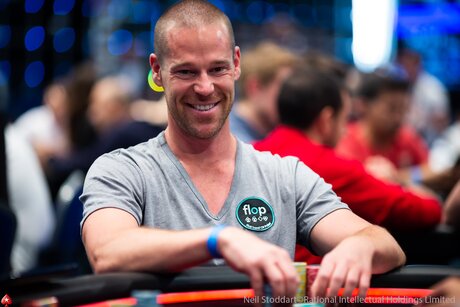
Patrik Antonius History: High-Stakes Razz and Stud

When poker historians attempt to document Patrik Antonius’s career in Razz and Seven Card Stud, they encounter a fascinating paradox: universal acknowledgment of his expertise coupled with remarkably sparse public records. Unlike his extensively documented Hold’em and Omaha careers, Antonius’s mastery of these classic variants exists primarily in the memories of Bobby’s Room regulars and the whispered legends of high-stakes mixed games.
The Single Tournament That Defines His Public Record
Antonius’s most significant documented achievement in Razz and Seven Card Stud came at the 2006 WSOP $50,000 H.O.R.S.E. World Championship, where he finished 9th out of 143 players for $205,920. This inaugural event, featuring the highest buy-in in WSOP history at the time, attracted poker royalty including eventual winner Chip Reese, Phil Ivey, and Doyle Brunson.
The H.O.R.S.E. format specifically rotated through Hold’em, Omaha Hi-Lo, Razz, Seven Card Stud, and Seven Card Stud Eight-or-Better, making this his only verifiable tournament cash in events featuring these variants. The final table included Barry Greenstein, David Singer, and T.J. Cloutier – all acknowledged Stud specialists.
Tournament Record Reality Check
Despite his acknowledged expertise, no records exist of Antonius cashing in any dedicated Razz or Seven Card Stud tournaments at:
- WSOP (2000-2024)
- EPT, WPT, or other major series
- Any documented mixed game series
Total WSOP earnings: $1,280,186 (zero bracelets)
This absence reflects his stated preference for cash games over tournaments, particularly in mixed game formats. As he explained in a 2021 interview: “Sometimes, I play mixed games, which may not be the best format for me, but I really enjoy playing when the game is changing.”
Bobby’s Room: The True Arena of Excellence
The heart of Antonius’s Razz and Stud career beats in Bobby’s Room at the Bellagio (renamed Legends Room in 2020), where he became the youngest player ever invited to “The Big Game.” These mixed games typically featured:
| Stakes | Typical Buy-in | Minimum Buy-in | Game Rotation |
|---|---|---|---|
| $800/$1,600 Limit | $200,000 | $20,000 | 8-11 variants |
| $2,000/$4,000 Limit | $300,000 | $40,000 | Including Razz, Stud, Stud-8 |
| $4,000/$8,000 Limit | $500,000+ | $80,000 | Full rotation every orbit |
In July 2018, Antonius was photographed with a $1 million stack at Bobby’s Room, demonstrating his continued participation at the highest levels. A year later, he lost $500,000 over three days in a specialized $6,000/$12,000 Omaha Hi-Lo game – a rare deviation from the standard mixed format but indicative of the massive swings at these stakes.
Fellow regular Brian Rast described Bobby’s Room as an “awesome crash course” for mixed games, specifically noting Doyle Brunson as an exceptional Razz player and David Oppenheim as “an amazing razz player” whom Antonius regularly faced. The education came at a price – minimum swings of hundreds of thousands were common.
Online Dominance During Poker’s Golden Age
During poker’s online golden age (2004-2011), Antonius accumulated over $11.8 million in winnings on Full Tilt Poker, with significant portions coming from mixed games that included Razz and Seven Card Stud. His screen names became legendary:
- “FinddaGrind” – #8 all-time high stakes winner with $5.7 million
- “Luigi66369” – $775,000 in additional winnings
The platform’s 10-game mix specifically included Limit Razz and Limit Seven Card Stud Hi, with games rotating every 10 hands at stakes reaching $1,500/$3,000.
2009 Online Results (High Stakes Database)
A revealing look at Antonius’s game-specific performance:
- PLO: +$5.8 million
- Pot-Limit Hold’em: +$2.8 million
- Seven Card Stud: LOSS
- Razz: LOSS
This data suggests that while competent, Stud variants weren’t his strongest games in ultra-competitive online environments.
Feel Over Formulas: His Unique Approach
Antonius’s approach to mixed games, including Razz and Stud, diverges sharply from modern GTO-based strategies. His poker education began at age 11 with “five-card stud with limit betting” among older friends, providing an early foundation in Stud variants.
“I don’t actually study poker at all, just play,” Antonius admitted in interviews. This intuitive style earned praise from Doyle Brunson, who stated: “Patrik is one of the players I would have named that would have fit in with the old days. He has the style, love of poker, instinct, and the gambling mentality that it takes to compete in high stakes games.”
Barry Greenstein offered perhaps the most telling assessment: “Patrik is only the second player I have seen who was able to win in mixed games at the highest levels with hardly ever having played a few of the games.”
This natural aptitude, combined with mentorship from Marcel Lüske and Jennifer Harman (the only woman in Bobby’s Room and later his advisor), allowed him to compete with specialists who’d played these variants for decades.
Legendary Rivalries That Shaped History
The Brunson Challenge
Antonius’s most famous mixed game confrontation came in 2009 when he challenged Doyle Brunson to a $1 million heads-up match “at any time, in any place, and any game.” Brunson, irritated by the challenge, responded by proposing matches in his specialty games:
- 7 Card Razz (Limit or Pot Limit)
- 6 Card Razz
- 7 Card Stud (multiple formats)
- Various other Stud variants
Brunson later said, “I would swim across a river to play with Patrik Antonius,” highlighting both respect and competitive desire. The match never materialized, leaving poker fans to wonder about the outcome.
Phil Ivey: The Ultimate Test
His rivalry with Phil Ivey extended deeply into mixed games at Bobby’s Room, where they regularly clashed at $4,000/$8,000 stakes. Ivey demonstrated his superiority in their most recent documented encounter, sweeping Antonius 3-0 in the 2021 WPT Heads-Up Championship for $400,000, though this was Hold’em rather than mixed games.
The Corporation Years
Antonius was part of “The Corporation” that faced billionaire Andy Beal in mixed games at stakes reaching $100,000/$200,000. Other regular mixed game opponents included:
- Jennifer Harman – Later became his advisor
- John “Johnny World” Hennigan – Elite Stud/Razz specialist
- Chip Reese – Whom Brunson called “the best seven-card stud player I’ve ever played with”
- Barry Greenstein – Acknowledged Stud Hi-Lo master
The Telling Absence from Television
Despite his reputation, televised coverage of Antonius playing Razz or Seven Card Stud is virtually non-existent. His appearances on High Stakes Poker (Seasons 3-6) and Poker After Dark featured exclusively No-Limit Hold’em.
The 2006 WSOP H.O.R.S.E. event likely received limited broadcast time compared to the Main Event, and no specific Razz or Stud hands featuring Antonius have been documented in major broadcasts. This absence reflects the broader poker broadcasting landscape of the mid-2000s, which heavily favored No-Limit Hold’em over mixed game variants.
Antonius expressed interest in appearing on modern PokerGO mixed game shows but cited scheduling conflicts: “I would like to play a couple times, those Poker After Dark cash games, but it has always been bad timing with the schedule.”
Hall of Fame Recognition and Modern Evolution
In 2024, Antonius received poker’s ultimate honor with induction into the Poker Hall of Fame, recognition that encompasses his entire career including mixed games expertise. Upon induction, he stated: “I’m gonna stick around for a long time,” signaling his continued commitment to high-stakes play.
The Technology Divide
By 2015, Antonius had largely abandoned online play due to tracking software, stating: “Software has made a big difference in high stakes gaming. If you do not use special poker software, then this is already a dishonest game.”
This principled stance effectively ended his online mixed games career, though he continues enjoying live mixed games where his feel-based style remains effective. He’s expressed concern about being “iced out” of some private high-stakes games, suggesting the competitive landscape continues evolving.
Master Razz and Stud Strategy
Ready to follow in Antonius’s footsteps? Explore our comprehensive guides:
Frequently Asked Questions
The Undocumented Master: A Legacy in Shadows
Patrik Antonius’s history in Razz and Seven Card Stud represents a fascinating paradox in modern poker – universally acknowledged expertise with minimal documentation. Unlike his extensively recorded Hold’em and Pot-Limit Omaha careers, his Stud variants legacy exists primarily in the memories of Bobby’s Room regulars and the account balances of Full Tilt Poker’s servers.
His single tournament cash in the 2006 H.O.R.S.E. Championship stands as the lone public monument to skills honed over thousands of hours at poker’s highest stakes. The absence of specific hand histories, detailed strategic content, or televised moments in these variants tells its own story about poker’s evolution.
While Antonius mastered games that defined earlier poker generations, the spotlight had already shifted to No-Limit Hold’em by the time cameras arrived at the tables. His Razz and Stud expertise remains poker’s open secret – respected by those who played against him, invisible to those who didn’t.
As the game continues evolving with solvers and tracking software, Antonius represents perhaps the last generation of feel-based players who could compete at the highest levels through pure instinct and table experience. His 2024 Hall of Fame induction ensures his legacy will be preserved, even if the specific hands and strategic innovations in Razz and Stud remain largely undocumented.
Key Takeaways: Antonius’s Razz and Stud Legacy
- Tournament Record: Single cash – 9th place, 2006 WSOP H.O.R.S.E. Championship ($205,920)
- Cash Game Home: Bobby’s Room at Bellagio, stakes up to $4,000/$8,000 limit
- Online Success: $11.8 million total on Full Tilt, but losses in Razz/Stud specifically
- Strategic Approach: Feel-based, no formal study, natural talent praised by legends
- Key Rivalries: Brunson (challenged to $1M match), Ivey, Harman, Reese
- Modern Status: 2024 Hall of Fame inductee, continues live play, abandoned online due to software
- Television Coverage: Zero documented Razz/Stud hands on major broadcasts
- Legacy Paradox: Widely acknowledged expertise with minimal public documentation
About the Author

Mixed Game Masters Editorial
Published: October 21, 2025 | Categories: Tournaments & Events, Draw & Lowball
Mixed Game Masters is the premier resource for non-Hold’em poker strategy, tournament coverage, and mixed game education. Our editorial team consists of experienced players and poker historians dedicated to preserving and sharing the rich history of poker’s most challenging variants.
We provide comprehensive coverage of stud games, lowball variants, and mixed game formats, helping players of all levels improve their skills beyond traditional No-Limit Hold’em.
Leave a Reply